.svg)




B2B marketing in 2025 was… a lot.
AI tools everywhere, cookies disappearing, channels blending into each other, and buyers quietly researching you for months before filling in a single form.
In all that noise, a handful of campaigns have properly cut through, and not because they shouted the loudest, but because they were smart, coherent and brutally audience-led.
This isn’t a greatest-hits list of “one nice film”. Every example here did three things well:
- Told a clear story rooted in a real business problem
- Orchestrated that story across multiple channels/touchpoints
- Delivered proof, not vibes, that it worked
We’ll walk through five of the most interesting B2B campaigns shaping 2025, then pull out practical ways you can steal the thinking on a much smaller budget for your 2026 marketing plan.
1. Pinterest - “P is for Performance”
Category: Ad tech / media platform (B2B)
Audience: Performance marketers and media buyers
Pinterest has long been pigeonholed as a “nice upper-funnel brand channel”. With its new suite of performance ad products, it needed to convince hard-nosed marketers that Pinterest could also drive lower-funnel results.
What they actually did
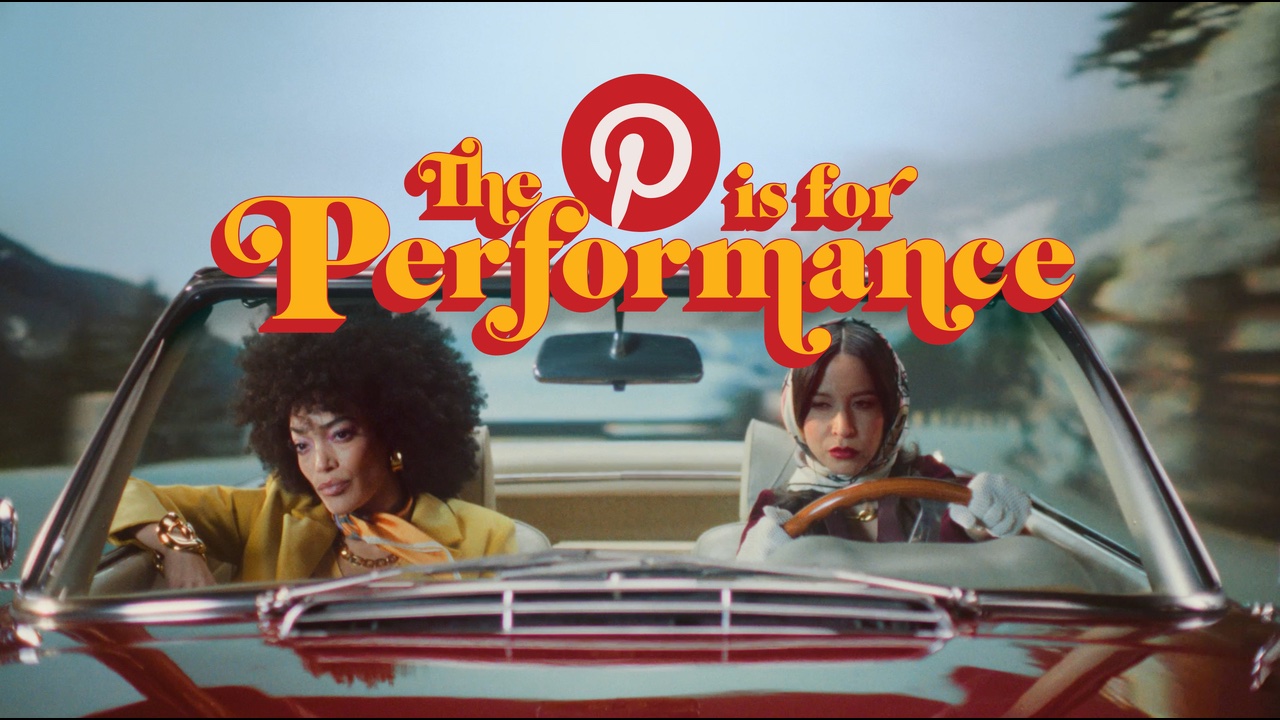
In early 2024, Pinterest launched “P is for Performance”, a global B2B campaign built around a series of over-the-top action “mini-movies” with the tagline “High Action! Lower Funnel!”. The ads follow two campy heroines navigating explosions and lava while talking about conversion rates and traffic uplift, very normal marketer behaviour.
Key points:
- Cinematic creative: Directed by commercial director Tim Godsall, voiced by Hollywood actor Corey Burton, styled like classic action films, but all about performance media.
- Clear product story: Each mini-film showcases specific performance tools, mobile deep links, Direct Links, shopping ads, Pinterest API for conversions, instead of vague “awareness” benefits.
- Multichannel distribution: The campaign ran across paid social, programmatic and trade publications in the US, UK, AU and beyond.
Proof it worked
Pinterest reported that advertisers using its performance products saw:
- Up to 28% increase in conversions and
- Up to 96% increase in traffic
Internally, the shift was huge too: the percentage of ad revenue from advertisers using at least three performance tools jumped from 2% to 23% in 2023
By 2025, the campaign was still being referenced in B2B creative round-ups and awards lists as a benchmark for repositioning a platform from “nice-to-have” to “performance engine”.
Why it worked
- Single, sharp narrative: This wasn’t “we have lots of cool features”. It was: Pinterest drives performance now, and here’s proof.
- Tone that matches the audience’s reality: The films acknowledge performance marketers’ pressure, “higher expectations, lower budgets”, instead of pretending media buying is glamorous.
- Channel-aware execution: They put performance messaging into performance environments (paid social, trade media, programmatic) where the exact people who care about CPAs would actually see it.
Takeaways for smaller teams
- Reposition your channel or product with one strong line. “High action, lower funnel” works because it fuses emotion (action) with outcome (funnel). Do you have a single line that does both?
- Turn feature launches into narratives. Instead of “we’ve added three new product features”, pick a theme like control, speed or confidence and build creative around that.
- Use your own numbers. You don’t need Pinterest’s dataset. If you’ve seen “customers who use X + Y feature see 24% more SQLs”, that’s campaign-worthy proof. Put it in the creative.
2. GfK/NIQ - “Human vs AI”
Category: Data & insights / martech
Audience: Marketers and insight leaders curious (and anxious) about AI
GfK-NIQ sells AI-powered brand and consumer insights exactly the type of thing marketers are interested in, but also slightly wary of. The brand wanted to be seen as a thought leader on AI in marketing, not just another vendor shouting “AI” on a landing page.
What they actually did
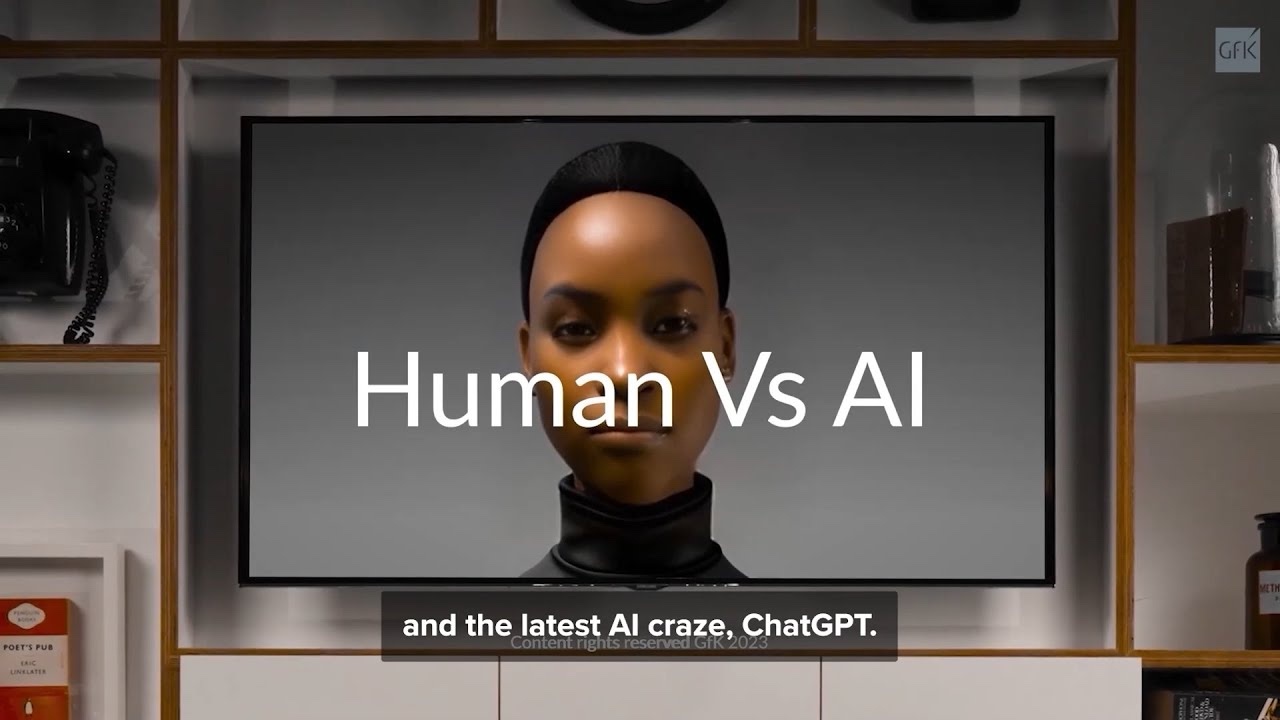
The “Human vs AI” campaign revolved around a debate between a human marketing expert and an AI “counterpart”, exploring how AI should (and shouldn’t) be used in brand decisions.
The execution was properly integrated:
- Hero content: A flagship debate video pitting human strategist against AI, hosted in a campaign hub and on YouTube.
- Search & social: YouTube clips, social cut-downs and paid search ads targeting AI/marketing queries drove traffic into the hub and debate replay.
- PR and awards: The campaign picked up a Silver at the B2B Marketing Awards for Best Use of AI and shortlist at the UK Agency Awards, credibility fuel they could recycle in outreach and sales decks.
Proof it worked
According to Big Star Copywriting’s breakdown of the campaign:
- 6.87 million impressions vs a 5 million target
- 90% of impressions came from Google Search and social ads, which only used 34% of the media budget
So not only did it smash reach targets, it did it efficiently by leaning on high-intent channels.
Why it worked
- It met a real emotional need. Marketers are genuinely unsure whether AI is coming for their jobs or making them superheroes. The debate format acknowledges that tension rather than hand-waving it away.
- The “versus” frame is simple and sticky. Everyone understands “Human vs AI”. It’s instantly legible in feeds, thumbnails and event invites.
- The media mix matched the question. If people are literally Googling “AI marketing examples”, meeting them via search and YouTube content is far more powerful than another generic whitepaper.
Takeaways for smaller teams
- Turn your buyers’ biggest anxiety into a show, not a brochure. If your SaaS product touches compliance, jobs, or budgets, build a debate, roundtable or live clinic around that “oh god” topic.
- Design one hero asset, then atomise it. GfK used a single debate to fuel long-form video, short clips, social, email and PR. You can do the same with a webinar or panel, just plan your cut-downs in advance.
- Measure beyond views. They didn’t just report impressions; they tracked where those impressions came from and how efficiently budget was used. Bake that into your reporting from day one.
3. Schneider Electric - “Turning Unsung Heroes into Impact Makers”
Category: Industrial tech / energy & data centre infrastructure
Audience: IT professionals and data-centre leaders inside enterprises
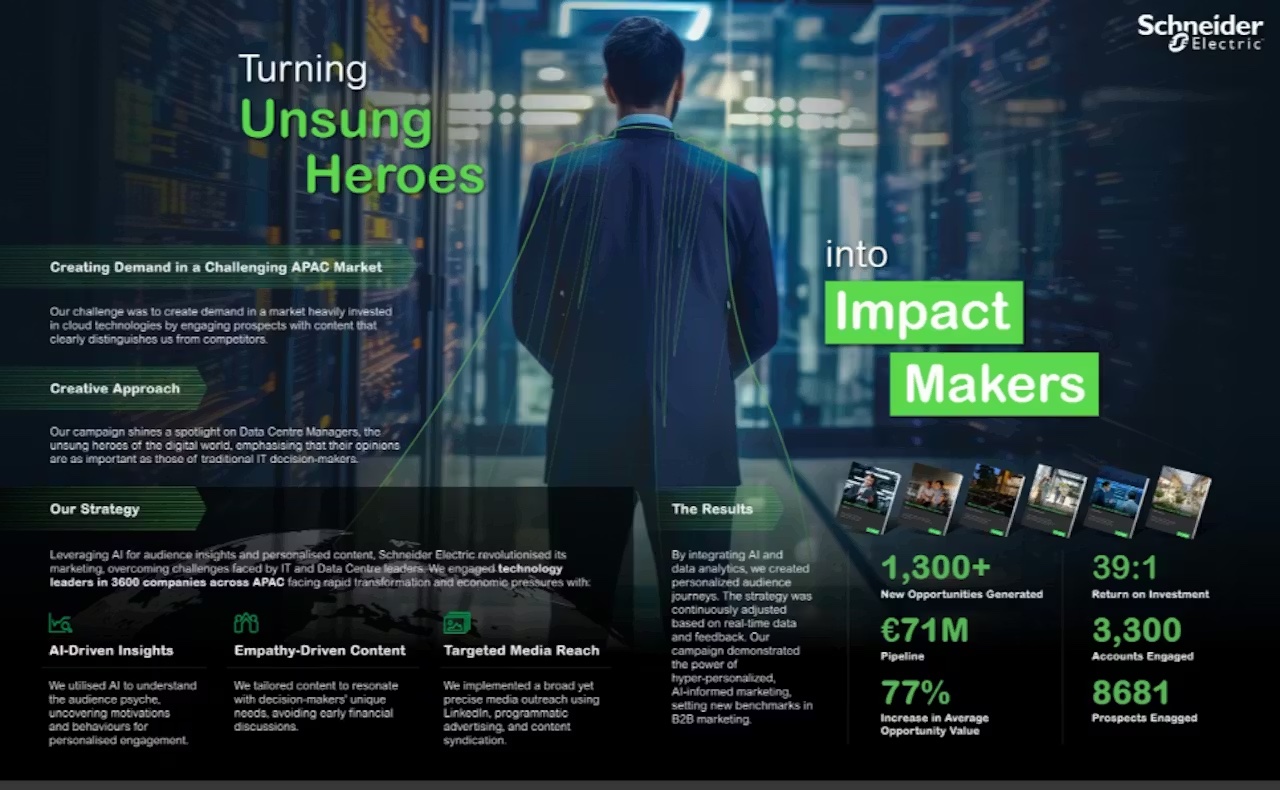
Schneider Electric wanted to grow its pipeline in sectors like retail, finance, education, manufacturing and healthcare, but its core buyers (IT and operations people) often feel invisible compared to the flashy “innovation” narratives aimed at C-suite leaders.
What they actually did
The “Turning Unsung Heroes into Impact Makers” campaign reframed IT professionals, the people running power, cooling and data infrastructure, as the heroes keeping modern business alive.
Campaign highlights:
- Audience-first positioning: IT teams were explicitly called “unsung heroes”, with creative showing the hidden impact of their decisions on safety, uptime and sustainability.
- AI-driven personalisation: Using a CDP and AI-driven insights, Schneider tailored messaging by sector (retail vs healthcare vs finance) while keeping the hero narrative consistent.
- Multichannel orchestration: Content ran across digital ads, personalised landing pages, email, sales enablement and partner channels, all telling the same “unsung heroes” story.
Proof it worked
A Mi-3 write-up of Schneider’s marketing investment notes that the Unsung Heroes campaign:
- Generated more than 1,300 business opportunities
- Created around AU$115 million in pipeline
It also won multiple awards, including honours at The Drum Awards for Marketing APAC 2024 for its B2B impact.
Why it worked
- It chose a clear hero, and it wasn’t the brand. The emotional core of the campaign was the IT person, not Schneider. That shift makes everything more relatable.
- Personalisation with an actual story, not just tokens. AI-driven targeting wasn’t used to awkwardly insert industry names into subject lines. It changed the stories, examples and pain points emphasised per sector.
- Sales could plug straight in. “Unsung heroes” is an easy story for reps to carry into pitches, decks and follow-ups. Marketing didn’t live in a vacuum.
Takeaways for smaller teams
- Pick one under-represented hero in your customers’ world. For SaaS and tech, that might be the RevOps lead, the overworked HR manager, or the person wrestling Salesforce on a Friday afternoon. Make them the centre of your narrative.
- Upgrade your “personas” to real archetypes. Instead of “IT Director, 15+ years’ experience”, define: What are they undervalued for? What do they wish leadership understood? Build your creative around that.
- You don’t need a CDP to personalise smartly. Start with 2–3 high-value segments (e.g. SaaS vs fintech vs eCommerce) and tweak examples, visuals and CTAs in your core assets.
4. Spotify Advertising - “Spreadbeats”
Category: Ad platform / media
Audience: Media planners and CMOs who see Spotify as “just audio”
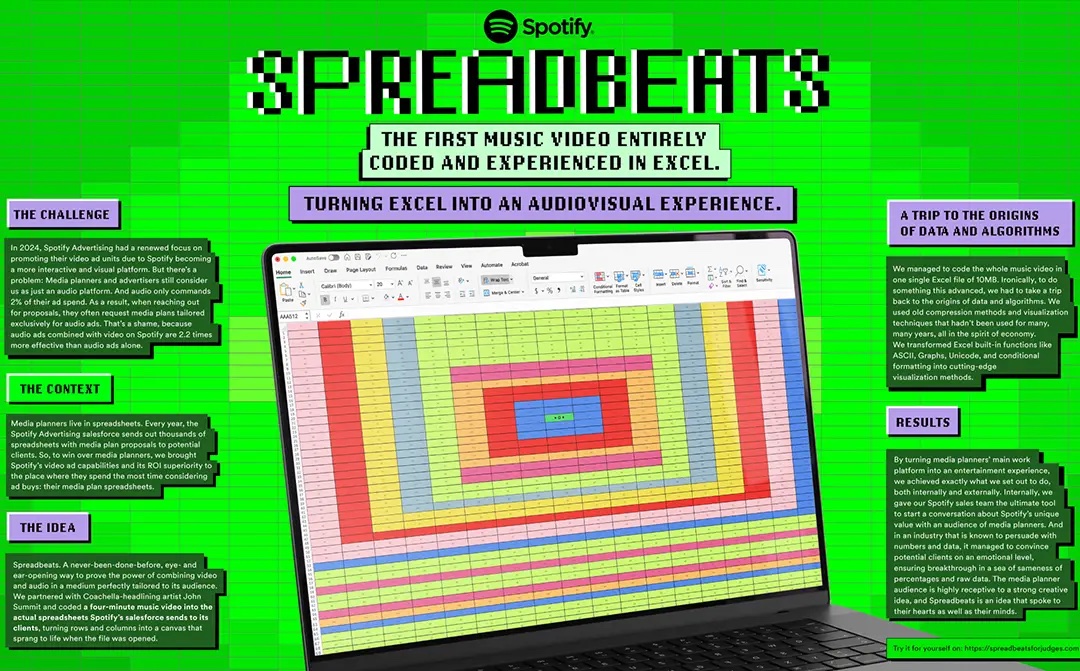
Spotify wanted to sell video ad inventory to planners who spend their lives in Excel, optimising rows and columns. So instead of dragging planners out of their spreadsheets… Spotify went into the spreadsheet.
What they actually did
The “Spreadbeats” campaign turned media planners’ Excel documents into a music video.
According to The One Club’s award case study:
- Spotify and agency FCB created a macro-enabled spreadsheet that turned planners’ media plans into music, each cell triggered notes and visuals.
- The creative demonstrated how combining Spotify’s audio + video ads delivers stronger performance than standalone formats, aligning with ROI data shown inside the experience.
- They distributed it directly to key planners and agencies, supported with PR, film content and award entries, turning it from a clever stunt into an extended B2B narrative about effectiveness.
Proof it worked
The One Show case write-up reports:
- 17:1 ROI on the campaign
- +5,650% more email forwards than the B2B average
- +870% ad engagement vs Spotify’s previous paid campaign
The campaign went on to win multiple top-tier creative and B2B awards in 2024–2025, cementing Spotify’s position as a serious B2B creative player.
Why it worked
- Perfect channel–message match. If your audience lives in spreadsheets, put your ad in a spreadsheet. This is “meet them where they are” taken literally.
- The product benefit is baked into the format. The experience doesn’t just tell you “audio + video is better”; it lets you experience it.
- It’s narrow and precise, not broad and shouty. This is classic ABM: small audience, very high relevance, high impact, then amplified with PR.
Takeaways for smaller teams
- Start with: “Where does my buyer live at 11:30am on a Tuesday?” It might be Notion, Jira, Salesforce, Figma, Slack, LinkedIn or WhatsApp. That’s a creative canvas.
- You don’t need a full music video. A lightweight version might be:
- A custom Notion template for product managers
- A live Google Sheet ROI calculator for finance teams
- A Figma file for designers that doubles as interactive demo
- Use PR and awards as force multipliers. If you create something very niche but very good, bake PR into the plan. Industry blogs and awards entries can massively extend reach.
5. Boomi x Superside - Rebuilding B2B Creative for an Integration SaaS
Category: iPaaS / integration SaaS
Audience: Technical and business decision-makers evaluating integration platforms
Boomi (integration-as-a-service platform) needed its advertising to stand out in a tech category full of blue gradients, buzzwords and smiling-with-laptops stock photos.
In 2025, Boomi worked with Superside to overhaul its global demand-gen creative.
What they actually did
From Superside’s case breakdown:
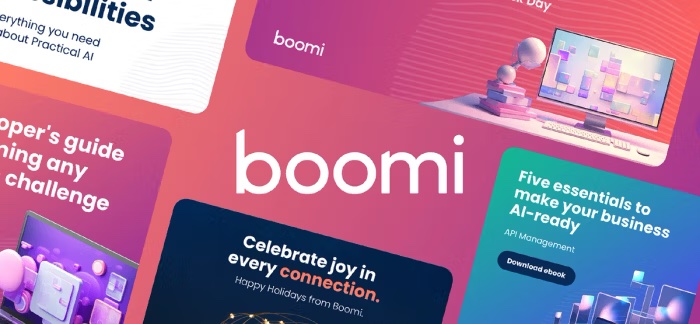
- Concept shift: Move from safe “enterprise IT” creative to bold, 3D-style visuals and punchy, conversational copy that leaned into the complexity Boomi solves.
- AI-assisted creative production: Using tools like Adobe Firefly and Midjourney to explore dozens of concepts, then refining the best into on-brand assets.
- Channel-specific design: Assets were built specifically for LinkedIn and paid social formats, not lazily resized from a single master visual.
- System, not one-off: The result was a scalable visual system Boomi could roll out across campaigns, not just a single ad set.
Proof it worked
Superside reports that the campaign delivered:
- A 24% engagement rate on LinkedIn (vs typical B2B averages of around 1–3.5%)
- 75+ unique visual assets produced, giving Boomi a deep bench of creative for testing and optimisation
Why it worked
- They treated creative as a performance lever, not decoration. The entire project started with a demand-gen problem, Boomi’s old ads were flat, and solved it with creative built for testing.
- Consistency without sameness. By designing a flexible system, Boomi could keep refreshing ads without losing recognition.
- Speed plus quality. AI was used carefully to explore directions, then human designers tightened everything. This is a useful reality check for every “AI will do the whole ad” hot take.
Takeaways for smaller teams
- Audit your category’s visual clichés. List the top 10 competitors in SaaS/tech and screenshot their ads. Then deliberately design against the common patterns.
- Build one simple creative system. You don’t need 75 assets. Start with:
- 2–3 core visual motifs
- 3–4 headline “angles”
- A handful of colour/shape rules
- and apply them across search landing pages, LinkedIn, and email.
- Use AI as a junior, not a creative director. Let it generate rough options; your team decides what’s on-brand, sharp and actually usable.
What these campaigns tell us about B2B marketing in 2025
Looking across Pinterest, GfK, Schneider, Spotify and Boomi, a few patterns show up that are very usable if you’re running B2B campaigns in SaaS, tech or eCommerce:
- Single story, many surfacesNone of these ideas lived in one asset. Each had a recognisable narrative that played consistently across video, web, events, paid social, PR and sales.
- Audience reality first, product secondThe product is framed as the answer to that reality, not the headline.
- Pinterest talks about pressure on performance marketers.
- GfK talks about AI anxiety.
- Schneider talks about invisible IT teams.
- Spotify talks to people stuck in Excel all day.
- Boomi talks to people drowning in integration complexity.
- Real numbers baked into the storyAll of them put hard stats into their narrative, from Pinterest’s 28% conversion uplift to GfK’s 6.87m impressions to Spotify’s 17:1 ROI and Schneider’s AU$115m pipeline. Those figures are story elements, not footnotes.
- Creative and performance aren’t separate anymoreBoomi, Pinterest and Spotify in particular show that creative decisions directly influence CTR, engagement and ROI. This is where SaaS and eCommerce marketers can get ahead: creative testing shouldn’t be the last 5% of the plan; it’s the plan.
How to apply this to your own B2B strategy (without a Cannes-level budget)
If you’re marketing a SaaS, tech or B2B eCommerce business, here’s a simple way to borrow from these campaigns:
- Create core messaging after the outcome, not the format.
- Pick one big hero asset and one tension.
- Design for the environment your buyer already lives in.
- Hard-wire measurement into the idea.
- Document the system so you can reuse it.
- Treat every strong campaign as infrastructure: landing page patterns, visual rules, message frameworks, data proof points. That’s how you get Boomi-style flexibility instead of starting from zero every quarter.
You don’t need celebrity directors, AI debates on a stage or musical spreadsheets to run a successful B2B campaign in 2025.
What you do need is:
- One sharp, honest story
- A buyer-centric tension at the heart of it
- Assets built for the channels your audience actually uses
- And the discipline to measure it like a grown-up
Get those right, and your “small” campaign can do exactly what these big ones did: make the right people care, remember, and eventually… convert.